Part 1: Who Are You?
Hypothetical Family Situation: I am a English native speaking, 17 years old woman. My child is a 6 months old infant who was born at 24 weeks with gastroschisis (an abdominal wall defect like omphalocele in which the anterior abdomen does not close properly allowing the intestines to protrude outside the fetus) which was corrected and is currently experiencing signs of developmental delay due to being born premature. As of a month ago, she stopped eating and is now being fed from a tube. She has now learned to turnover but has yet to crawl, coo, pull up, or sit up on her own. She does have stimulation of her extremities and communicates through crying and smiling. I live with my 60 years old aunt and uncle (who suffers from COPD) in a middle class neighborhood and my daughter's father passed away from Sickle Cell complications a month ago. I have several friends and family to support me with my daughter so that I can graduate high school and hopefully attend college.
My aunt cares for my daughter while I attend school but doesn't provide any cognitive or physical stimulation. I have been advised from my pediatrician to begin researching child care centers so that my infant will be able to socialize with others her age and in return gain certain developmental skills that she is currently missing. I need a facility that can handle his condition efficiently. As stated, she is eating from a feeding tube and can only turnover. She does not communicate verbally outside of crying and smiling. While my pediatrician has been a wealth of information, I have found it difficult to find outside care for her. When I find a facility that meets my needs, they are full and those who have spots available aren't equipped to provide care for my daughter's condition. A center that can provide Health, Early learning and Development as well as Family Leadership and Support would be a great resource for someone in my position. I receive public assistance/disability for my daughter but that is a journey within itself but it helps to pay for all my daughter's care (including medial supplies and doctor visits). I feel as if I am in need of a Family Advocate...one who can connect me to the resources we so desperately need. I am exhausted and running out of answers. What should I do?
Sunday, February 14, 2016

Saturday, February 6, 2016
The Political Will to Improve Early Childhood Systems

I'm not sure if the National Governors Association is currently being used by advocates or organizations to influence political will toward improving early childhood systems in order to foster the well-being of young children and their families but I found this website mind-blowing! The purpose of the NGA (National Governors Association) Center for Best Practices in regards to early care and education is to “provide information, research, policy analysis, technical assistance and resource development for governors and their staff in the areas of early childhood, K-12 and postsecondary education. The division focuses on helping governors develop effective policy and support its implementation in the areas of: early education, readiness and quality; the Common Core State Standards, Science Technology Engineering and Math and related assessments; teacher and leader effectiveness; competency-based learning; charter schools; data and accountability; and postsecondary (higher education and workforce training) access, success, productivity, accountability, and affordability (http://www.nga.org/cms/home/nga-center-for-best-practices/center-divisions/center-issues/page-edu-issues/early-learning-from-birth-throug.html)”. It, also, assists with policy issues related to bridging the system divides among the early childhood, K-12, postsecondary and workforce systems.

In the paper, Alliance for Early Success: Building State Policies for Children and their Families, the NGA highlighted on different policy solutions that could improve the early care and education field. One of such solutions was: Adopt policies that encourage involvement of fathers (or noncustodial parents). The work that NGA does in regards to highlighting and implementing effective policies for governors and the early care and education sector, appeals to me the most because it specifically researches and organizes various policies for the betterment of the early childhood field. This entire section on the NGA website and its suggestions is for the betterment of improving early childhood systems.
References
National Governors Association. Retrieved January 27, 2016 from http://www.nga.org/cms/home/nga-center-for-best-practices/center-divisions/center-issues/page-edu-issues/early-learning-from-birth-throug.html
Saturday, January 23, 2016
Parent, Family, and Community Engagement
In reviewing the Parent and Family Stories found on Head Start: An Office of the Administration of Children and Families Early Childhood Learning and Knowledge Center (ECLKC) website (http://eclkc.ohs.acf.hhs.gov/hslc/hs/about/stories/pfs) the story of Melinda George (a Head Start parent, staff member, and doctoral candidate) had the greatest impact on me. Her story had such a significant impact on me because it was how my HS journey began! She started off as a parent, became an employee, and now a doctoral candidate. My journey with HS began with me being a parent and several years later, I became an employee where I was encouraged to finish my B.A. degree in Early Childhood Education Administration as well as receive my Director's Credential. "...if you want people to want more, you have to show them that's it's achievable (http://eclkc.ohs.acf.hhs.gov/hslc/hs/about/stories/pfs)".

This is why involvement opportunities for parents and family members are so crucial and benefit young children, families, and the early childhood field. It is as Almeta Richards Keys states, "...there are many stories that I can tell, but I think the main story that I would like to say today is that Head Start is about empowering parents, empowering families -- about moving families to self-sufficiency (http://eclkc.ohs.acf.hhs.gov/hslc/hs/about/stories/pfs)". In my experience with HS as a parent and teacher, I accomplished the goal of self-sufficiency and now I am a testament to the fact that when the teacher is successful, then he/she can show the parent how to be successful. When the parent achieves success, then he/she can show their child how to achieve goals. When the child is able to achieve their goals and dreams, then he/she brings even more to the community in which he/she resides or is employed in. From my experience and that of Melinda George and Almeta Richards Keys, HS set the foundation for such achievements which has a great impact on the family as a whole. When parents are encouraged to and supported in becoming involved with various opportunities within the classroom/center, this then strengthens the parent-teacher relationship, the student-teacher relationship, and everyone's overall experience within the program.
Reference
Parent and Family Stories on the website of the Early Childhood Learning and Knowledge Center (ECLKC), part of the Office of Head Start. Retrieved from http://eclkc.ohs.acf.hhs.gov/hslc/hs/about/stories/pfs.
This is why involvement opportunities for parents and family members are so crucial and benefit young children, families, and the early childhood field. It is as Almeta Richards Keys states, "...there are many stories that I can tell, but I think the main story that I would like to say today is that Head Start is about empowering parents, empowering families -- about moving families to self-sufficiency (http://eclkc.ohs.acf.hhs.gov/hslc/hs/about/stories/pfs)". In my experience with HS as a parent and teacher, I accomplished the goal of self-sufficiency and now I am a testament to the fact that when the teacher is successful, then he/she can show the parent how to be successful. When the parent achieves success, then he/she can show their child how to achieve goals. When the child is able to achieve their goals and dreams, then he/she brings even more to the community in which he/she resides or is employed in. From my experience and that of Melinda George and Almeta Richards Keys, HS set the foundation for such achievements which has a great impact on the family as a whole. When parents are encouraged to and supported in becoming involved with various opportunities within the classroom/center, this then strengthens the parent-teacher relationship, the student-teacher relationship, and everyone's overall experience within the program.
Reference
Parent and Family Stories on the website of the Early Childhood Learning and Knowledge Center (ECLKC), part of the Office of Head Start. Retrieved from http://eclkc.ohs.acf.hhs.gov/hslc/hs/about/stories/pfs.
Saturday, January 16, 2016
Quality Programs for All Children
From my perspective, it is hard to say what the current public opinion in the United States is with regard to the value and importance of providing quality services for young children and families because there are so many varying interpretations. Even with the argument of play, there are those (including parents) whom feel it is a waste of time; while others believe it is a critical component of "providing quality services" for early learners. From my professional and personal viewpoint, I believe the current public opinion with regard to providing quality services depends on who you ask. I have been actively involved in the early childhood field for about 12 years now and looking at the parents that I have met and interacted with, I have found that "quality" is a matter of perspective.

Some parents just want a place to drop their child off because it is a necessity that they work but can't really afford those quality child care programs. There are other families that can afford (to a certain degree) quality programs for their children but don't really understand the significance or the value of such services. And lastly, there are those handful of parents who respect and appreciate high-quality programs and can afford the attendance for their child(ren). From my standpoint, in being inside the centers in which is a substantial element of the early childhood field, most parents are not really concerned with if the center is quality or "high-quality" but more so how much is tuition and can I afford it. I believe it is the early childhood professional and those invested in this field whom are more concerned with providing high-quality services for all children and their families. But, what is the disconnect between the parents and the professionals?
"Every program has a culture — a set of expectations, language, routines, and ways of being together that shape the group’s identity. The culture you develop sets the tone, reflects who you are, and expresses how you want children and adults to live and learn together. Do professional development efforts to improve quality bring a culture of joy to the center, or merely a culture of compliance? For instance, do you see children and adults clearly engaged with each other and enthusiastic about what they are doing? Or, are they primarily focused on the schedule, regulations, and behavior management? Is there a palpable philosophy and identity in this program, or does it look like a page out of a catalogue that could be anywhere? Are the stories people go home with each day told with a sense of delight? Do the children and adults feel like they are part of a special community of friends who care about others and the world? (Carter, 2008, p. 33)". These questions influence the quality of the early childhood field, especially in regards to the early learning classroom. If the teachers, directors, and administrators do not express on a daily basis enthusiasm for the service that they provide, then how will the parents understand and in return appreciate/value the quality they receive?
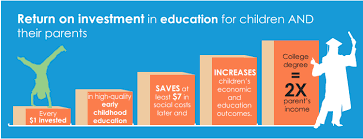
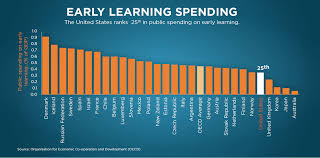
I hope that there will be a change in public opinion to the extent that the early childhood field receives the funding, support, and recognition needed (and deserved) so that we can incorporate well-trained, dedicated, passionate, properly educated individuals to continue the work and expansion of this field. I imagine that the related implications for young children, families, and the early childhood field will be a recognizable, across the board, mandated standard of high-quality and a zero tolerance for anything less.
Reference
Carter, M. (2008). Assessing quality: What are we doing? Where are we going? Exchange, (184), 32–35.
Some parents just want a place to drop their child off because it is a necessity that they work but can't really afford those quality child care programs. There are other families that can afford (to a certain degree) quality programs for their children but don't really understand the significance or the value of such services. And lastly, there are those handful of parents who respect and appreciate high-quality programs and can afford the attendance for their child(ren). From my standpoint, in being inside the centers in which is a substantial element of the early childhood field, most parents are not really concerned with if the center is quality or "high-quality" but more so how much is tuition and can I afford it. I believe it is the early childhood professional and those invested in this field whom are more concerned with providing high-quality services for all children and their families. But, what is the disconnect between the parents and the professionals?
"Every program has a culture — a set of expectations, language, routines, and ways of being together that shape the group’s identity. The culture you develop sets the tone, reflects who you are, and expresses how you want children and adults to live and learn together. Do professional development efforts to improve quality bring a culture of joy to the center, or merely a culture of compliance? For instance, do you see children and adults clearly engaged with each other and enthusiastic about what they are doing? Or, are they primarily focused on the schedule, regulations, and behavior management? Is there a palpable philosophy and identity in this program, or does it look like a page out of a catalogue that could be anywhere? Are the stories people go home with each day told with a sense of delight? Do the children and adults feel like they are part of a special community of friends who care about others and the world? (Carter, 2008, p. 33)". These questions influence the quality of the early childhood field, especially in regards to the early learning classroom. If the teachers, directors, and administrators do not express on a daily basis enthusiasm for the service that they provide, then how will the parents understand and in return appreciate/value the quality they receive?
I hope that there will be a change in public opinion to the extent that the early childhood field receives the funding, support, and recognition needed (and deserved) so that we can incorporate well-trained, dedicated, passionate, properly educated individuals to continue the work and expansion of this field. I imagine that the related implications for young children, families, and the early childhood field will be a recognizable, across the board, mandated standard of high-quality and a zero tolerance for anything less.
Reference
Carter, M. (2008). Assessing quality: What are we doing? Where are we going? Exchange, (184), 32–35.
Saturday, January 9, 2016
What Resonates With You About Early Childhood Public Policy and Advocacy?
Part 1: Why did you choose this specialization?
"The commonalities between all five sectors (research/academia, child care, head start, health and well-being, and public early childhood education) focus on the health, well-being, and education of the children and their families. The focus is further sustained by conducting research on children’s development and learning; adequately preparing early childhood professionals to support the children and their families; designing child care programs and curriculum that include all children (birth through third grade) and follow state standards and regulations; and ensuring that all child care is of quality, affordable, and easy to access (Laureate Education, 2011)".
I chose to focus my Master's degree on Public Policy and Advocacy because of my genuine passion for the mind, body, and spirit of children and their families. As a parent and early childhood professional, I am in the position to observe both aspects of the field. This gives me the opportunity to experience early childhood from a parent perspective but be educationally-equipped to find solutions to common problems that children and families face. I found that the more information I obtain, the better I am able to help the parents that I interact with. In continuing my education, I wanted to obtained higher learning in an area that went beyond the child care center/classroom. I wanted to get understanding on a state/government level so that I become a more efficient resource and can bring even more information to the children, parents, employees, and the community.

Part 2: Advocates are essential in the early childhood field because “You are influential with your family and friends. They now and trust you and what you tell them about early childhood education and care may be more powerful for them than what they read in the newspaper or see on television. You are influential in your community. The people on your street, in your neighborhood, in your town know you. You are their expert on early childhood education and care, they trust you. You are influential in your local government. You know the friends, families, and associates of the members of your school board, your municipal council, and your state legislature. You represent the opinions and votes of those who elected them. You are as important, or more important, to them than any expert (Feeney, 2010 p. 451-452)”.

Part 3: Three goals that I hope to learn about public policy and advocacy are:
1. To learn and understand the research conducted to which early childhood policies and best practices stem from.
2. To learn how to effectively advocate for children and their families.
3. To learn what is truly at the core of the lack of interest from policy makers, funding sources, and government who disregard the vital part early childhood education plays in the healthy development of every child.
References
Feeney, S. (2010). Who Am I in the Lives of Children?: An Introduction to Early
Childhood Education (eighth ed.). Upper Saddle River, NJ: Pearson
Education, Inc.
"The commonalities between all five sectors (research/academia, child care, head start, health and well-being, and public early childhood education) focus on the health, well-being, and education of the children and their families. The focus is further sustained by conducting research on children’s development and learning; adequately preparing early childhood professionals to support the children and their families; designing child care programs and curriculum that include all children (birth through third grade) and follow state standards and regulations; and ensuring that all child care is of quality, affordable, and easy to access (Laureate Education, 2011)".
I chose to focus my Master's degree on Public Policy and Advocacy because of my genuine passion for the mind, body, and spirit of children and their families. As a parent and early childhood professional, I am in the position to observe both aspects of the field. This gives me the opportunity to experience early childhood from a parent perspective but be educationally-equipped to find solutions to common problems that children and families face. I found that the more information I obtain, the better I am able to help the parents that I interact with. In continuing my education, I wanted to obtained higher learning in an area that went beyond the child care center/classroom. I wanted to get understanding on a state/government level so that I become a more efficient resource and can bring even more information to the children, parents, employees, and the community.
Part 2: Advocates are essential in the early childhood field because “You are influential with your family and friends. They now and trust you and what you tell them about early childhood education and care may be more powerful for them than what they read in the newspaper or see on television. You are influential in your community. The people on your street, in your neighborhood, in your town know you. You are their expert on early childhood education and care, they trust you. You are influential in your local government. You know the friends, families, and associates of the members of your school board, your municipal council, and your state legislature. You represent the opinions and votes of those who elected them. You are as important, or more important, to them than any expert (Feeney, 2010 p. 451-452)”.
Part 3: Three goals that I hope to learn about public policy and advocacy are:
1. To learn and understand the research conducted to which early childhood policies and best practices stem from.
2. To learn how to effectively advocate for children and their families.
3. To learn what is truly at the core of the lack of interest from policy makers, funding sources, and government who disregard the vital part early childhood education plays in the healthy development of every child.
References
Feeney, S. (2010). Who Am I in the Lives of Children?: An Introduction to Early
Childhood Education (eighth ed.). Upper Saddle River, NJ: Pearson
Education, Inc.
Laureate Education, Inc. (2011) [Multimedia program]. Sectors of the Early Childhood Field.
Retrieved from http://mym.cdn.laureatemedia.com/2dett4d/Walden/EDUC/6005/04/mm/Sectors/Main.html
Tuesday, December 15, 2015
Phenomenal Achievement Along Your Journey
I would like to acknowledge all of my colleagues for such a dynamic collaborative learning community. Thank you for all of your insight, perspectives, experiences, and suggestions. Communication & Collaboration in Early Childhood, has been the best course by far! I feel I have grown in my communication efforts, personally and professionally. I have learned perspectives and concepts that I will carry with me onto future endeavors. I wish everyone phenomenal success and achievement along their journey!
Monique Woodard
Monique Woodard
Sunday, December 6, 2015
Team Building and Collaboration Part 1
In considering the adjorning phase of several groups in which I have been involved, I do not believe that high-performing groups are hardest to leave. As a person who can be considered an introvert and prefers working independently, it was considered a relief (for me) when the project was completed because I could move on to my regular life and wouldn't have to engage in uncomfortable conversations. In social situations such as working closely with a group on a project or goal, such interactions made me slightly uncomfortable and I would actually look forward to the project being completed or the goal being achieved. But, in my personal opinion, I believe there is a difference between groups who are working on a project and those who are working together to achieve a goal in regards to the adjorning phase. If one is working with other individuals to complete a project, this is more temporary because a deadline is established. So, in going into the project, all members are aware that they have a deadline to meet and more focus is put on completing the project by the deadline. However, with a group working towards a goal, there is no outlined deadline and when individuals are working towards a common goal, that commonality sets the foundation for a more prolonged engagement which can possibly lead into friendship.
The group that I participated in that was the hardest to say good-bye was the co-workers that I worked with when I was an Early Head Start teacher. I considered this a group because we all had a common goal in which we worked together to achieve and that was to make sure our "babies" were prepared for Head Start. I had about 5 friends who were fellow teachers that I had become extremely close with. We were so close that we had outings after work once a week and we would travel out of town together every other month! We were laid off about 4 years ago and some of us eventually went our separate ways but I still miss them to this day. There are about 3 friends that I keep in continuous contact with.
A closing ritual that I have experienced is the infamous "take you out to lunch for your last day"! It is hard to imagine how I will adjourn from the group of colleagues I have formed while working on my master's degree in this program. It's sad to admit...but I am going to be so happy that I have completed this journey and achieved my goal...I will be grateful that it's over!
The group that I participated in that was the hardest to say good-bye was the co-workers that I worked with when I was an Early Head Start teacher. I considered this a group because we all had a common goal in which we worked together to achieve and that was to make sure our "babies" were prepared for Head Start. I had about 5 friends who were fellow teachers that I had become extremely close with. We were so close that we had outings after work once a week and we would travel out of town together every other month! We were laid off about 4 years ago and some of us eventually went our separate ways but I still miss them to this day. There are about 3 friends that I keep in continuous contact with.
 |
| My close co-workers and I at our friend's wedding in Pensacola in 2010!!! (I'm in the gray boots!!!) |
A closing ritual that I have experienced is the infamous "take you out to lunch for your last day"! It is hard to imagine how I will adjourn from the group of colleagues I have formed while working on my master's degree in this program. It's sad to admit...but I am going to be so happy that I have completed this journey and achieved my goal...I will be grateful that it's over!
Subscribe to:
Posts (Atom)