I communicate with certain individuals differently because my main focus when talking with those around me is to make them feel comfortable and understood. I have a lot of people whom confide in me because whatever that person tells me, I am not the one to judge nor the one to repeat what has been said. I always remain more of a listener than talker, which is one strategy that I can use to help me communicate more effectively with children, families, and colleagues from diverse backgrounds. Other strategies would be maintaining the Platinum Rule during conversation and continuously reminding myself to reflect on my tone of voice, my expressions, and other factors influencing my communication style.
Thursday, November 12, 2015
Communication and Culture
When I think about the cultural diversity that I see in my neighborhood and workplace, I do find myself communicating differently with people from different groups and cultures. To the extent that most people that I know or associate with would consider me "quiet". At times, I am so overwhelmed with the thought of interacting with people different than me (in general) that I just choose to say nothing at all. I can have an opinion or be familiar with the topic of conversation but since I don't want to intrude on another's interaction...I ultimately just simply observe and listen. But, with my family or those that I'm close with experience my authenticity in different degrees. I tend to react to how others carry themselves. For example, when I am around my closest family members and my husband (who are very blunt and expressive), I am comfortable with being my true self. I speak differently, I express my feelings more passionately, and I don't have to hide the core of who I am. However, with family members that portray themselves as being more reserved, I will become more reserved when interacting with them. With colleagues in the workplace, I speak accordingly. This means I am more proper, selective in the conversations I chose to participate in, and maintain a certain professionalism in my tone and delivery.
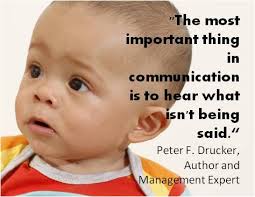
I communicate with certain individuals differently because my main focus when talking with those around me is to make them feel comfortable and understood. I have a lot of people whom confide in me because whatever that person tells me, I am not the one to judge nor the one to repeat what has been said. I always remain more of a listener than talker, which is one strategy that I can use to help me communicate more effectively with children, families, and colleagues from diverse backgrounds. Other strategies would be maintaining the Platinum Rule during conversation and continuously reminding myself to reflect on my tone of voice, my expressions, and other factors influencing my communication style.
I communicate with certain individuals differently because my main focus when talking with those around me is to make them feel comfortable and understood. I have a lot of people whom confide in me because whatever that person tells me, I am not the one to judge nor the one to repeat what has been said. I always remain more of a listener than talker, which is one strategy that I can use to help me communicate more effectively with children, families, and colleagues from diverse backgrounds. Other strategies would be maintaining the Platinum Rule during conversation and continuously reminding myself to reflect on my tone of voice, my expressions, and other factors influencing my communication style.

Saturday, November 7, 2015
Communication Skills: Language, Nonverbal, Listening
The show that I chose to use to complete this post was: Sesame Street: Animals and Nature: Firefly Show. I chose this particular show because it incorporates a variety of characters (humans, puppets, and cartoons) and thought it would be exciting to watch a children's show where I couldn't read the lips (the puppets), only go by the characters nonverbal behavior. I thought it would be intriguing to try to figure out a scene's plot with only puppets communicating with each other! With props used by the puppets as well as the hand gestures of the people on the show, it portrayed an unspoken understanding of what was being discussed in a particular scene. For example, some of the characters would point to the screen which I assumed them trying to communicate with the television audience. The characters' relationships are based on cooperation and togetherness. In every scene, there are at least two characters whether it be a human and a puppet or two puppets or two humans always communicating with each other. They seem to ask questions, offer insight, and try to solve a problem together.

It was hard to understand their feeling without words but by their nonverbal behavior, the characters seemed to be happy, engaged in active listening, and respectful of those around them. In certain scenes, the puppets seemed perplexed because they could not find the firefly; however, the assumptions that I made about the characters and plot based on the ways in which I interpreted the communication I observed were accurate. The show did contain various scenes where they involved the television audience as well as depicted togetherness and cooperation.


I do not believe my assumptions would be more correct if I watched a show I was familiar with and/or different characters.
It was hard to understand their feeling without words but by their nonverbal behavior, the characters seemed to be happy, engaged in active listening, and respectful of those around them. In certain scenes, the puppets seemed perplexed because they could not find the firefly; however, the assumptions that I made about the characters and plot based on the ways in which I interpreted the communication I observed were accurate. The show did contain various scenes where they involved the television audience as well as depicted togetherness and cooperation.
I do not believe my assumptions would be more correct if I watched a show I was familiar with and/or different characters.
Sunday, November 1, 2015
Competent Communication
I had an extremely hard time trying to find a person that demonstrates competent communication within a particular context because there were so many to choose from! I ultimately chose Lousie Derman-Sparks and Nadiyah Taylor. Lousie Derman-Sparks (Professor Emeritus and co-author of Anti-Bias Education for Young Children and Ourselves as well as other texts) and Nadiyah Taylor (Department Coordinator and Professor of Early Childhood Development). These two women are from the Laureate Education multimedia presentations. In my professional opinion, they closely exhibited effective communication during their interviews. I was intrigued with their dialogue, how they expressed their ideas effectively, they were respectively of each other and the topics in which they chose to highlight on kept my interest.
I would like to model some of my own communication behaviors after these two individuals. I want to effectively communicate my ideas while respectively acknowledging another's opinion (especially when different from mine!). I want to be in a position to understand the early childhood field thoroughly and able to speak on a vast number of topics while offering knowledge to those listening.
 |
| Louise Derman-Sparks |
 |
| Nadiyah Taylor |
I would like to model some of my own communication behaviors after these two individuals. I want to effectively communicate my ideas while respectively acknowledging another's opinion (especially when different from mine!). I want to be in a position to understand the early childhood field thoroughly and able to speak on a vast number of topics while offering knowledge to those listening.
Saturday, October 24, 2015
Professional Hopes and Goals
When I think about working with children and families who come from diverse backgrounds and a goal I would like to set for the early childhood field related to issues of diversity, equity, and social justice, I hope to fully embody a quote I found during this class.
"…to be the grain of sand that forms the core of the pearl, you must learn the gentle art of using disagreement about educational practice to your advantage…and you must choose when to stand firm and when not to. Not every issue is worth fighting; not every battle can be won. As an ethical professional, you may have hard choices to make. We urge you stand up for children and to make their well-being your primary concern; to say no when asked to do what is wrong; to insist on speaking what you know to be true; to risk making yourself unpopular; and to give others the courage to do the same. It’s a lot to ask. But it’s the right thing to do, and children need you to do it (Morrison, 2009, p. 17; Feeney, 2010, 452-453)”.
I would like to wholeheartedly thank Dr. D and all of my colleagues who have participated, given phenomenal advice and insight, and learned with me along this journey of Perspective Diversity and Equity. This had been an excellent group of scholars!!!!
However, I would like to extend a special "THANK YOU" to Kate Koontz and Salesha Baston for your endless contribution to my posts throughout this course!!! :)
Monique
References
Feeney, S. (2010). Who Am I in the Lives of Children?: An Introduction to Early
Childhood Education (eighth ed.). Upper Saddle River, NJ: Pearson
Education, Inc.
Morrison, G. (2009). Early Childhood Education Today (eleventh ed.). Upper
Saddle River, NJ: Pearson Education, Inc.
"…to be the grain of sand that forms the core of the pearl, you must learn the gentle art of using disagreement about educational practice to your advantage…and you must choose when to stand firm and when not to. Not every issue is worth fighting; not every battle can be won. As an ethical professional, you may have hard choices to make. We urge you stand up for children and to make their well-being your primary concern; to say no when asked to do what is wrong; to insist on speaking what you know to be true; to risk making yourself unpopular; and to give others the courage to do the same. It’s a lot to ask. But it’s the right thing to do, and children need you to do it (Morrison, 2009, p. 17; Feeney, 2010, 452-453)”.
I would like to wholeheartedly thank Dr. D and all of my colleagues who have participated, given phenomenal advice and insight, and learned with me along this journey of Perspective Diversity and Equity. This had been an excellent group of scholars!!!!
However, I would like to extend a special "THANK YOU" to Kate Koontz and Salesha Baston for your endless contribution to my posts throughout this course!!! :)
Monique
References
Feeney, S. (2010). Who Am I in the Lives of Children?: An Introduction to Early
Childhood Education (eighth ed.). Upper Saddle River, NJ: Pearson
Education, Inc.
Morrison, G. (2009). Early Childhood Education Today (eleventh ed.). Upper
Saddle River, NJ: Pearson Education, Inc.
Saturday, October 17, 2015
Welcoming Families From Around the World
A new family has arrived to my center from Jalisco, Mexico.
The first way (and extremely essential) in which I will prepare myself to be culturally responsive towards my new family is to not make any assumptions. I would ask if an interpreter is required for the our meeting and not assume everyone speaks English. Another way is to be culturally responsive is to begin dialogue by asking the family to tell me about if and how they celebrate holidays and birthdays as well as what is important to their family and its culture. With their permission, I would post a photograph of the child(ren) and their family and ask how I can incorporate their culture into the center and their child's classroom. I would, also, study their country and learn various aspects of it to implement into the center's environment.

"When you support diverse families you do not make assumptions. You do not assume that every family celebrates the same holidays, has a mother and father, eats the same foods, sees the role of child and parent in the same way, believes in the same (or any) god, has the same ways of caring for a child, or shares the same view of death and what happens after death. To avoid making assumptions, tell families that you respect and honor them for who they are and ask them to help you to support their child by explaining their perspectives and beliefs to you (Feeney, 2010, p. 418)". I hope the preparations in place for this new family will allow them to feel welcomed and know that they are valued and appreciated. I hope this will present an opportunity to establish a strong line of open communication between the staff of the center, the child's teacher(s), and the family.
Reference
Feeney, S. (2010). Who Am I in the Lives of Children?: An Introduction to Early
Childhood Education (eighth ed.). Upper Saddle River, NJ: Pearson
Education, Inc.
The first way (and extremely essential) in which I will prepare myself to be culturally responsive towards my new family is to not make any assumptions. I would ask if an interpreter is required for the our meeting and not assume everyone speaks English. Another way is to be culturally responsive is to begin dialogue by asking the family to tell me about if and how they celebrate holidays and birthdays as well as what is important to their family and its culture. With their permission, I would post a photograph of the child(ren) and their family and ask how I can incorporate their culture into the center and their child's classroom. I would, also, study their country and learn various aspects of it to implement into the center's environment.
"When you support diverse families you do not make assumptions. You do not assume that every family celebrates the same holidays, has a mother and father, eats the same foods, sees the role of child and parent in the same way, believes in the same (or any) god, has the same ways of caring for a child, or shares the same view of death and what happens after death. To avoid making assumptions, tell families that you respect and honor them for who they are and ask them to help you to support their child by explaining their perspectives and beliefs to you (Feeney, 2010, p. 418)". I hope the preparations in place for this new family will allow them to feel welcomed and know that they are valued and appreciated. I hope this will present an opportunity to establish a strong line of open communication between the staff of the center, the child's teacher(s), and the family.
Reference
Feeney, S. (2010). Who Am I in the Lives of Children?: An Introduction to Early
Childhood Education (eighth ed.). Upper Saddle River, NJ: Pearson
Education, Inc.
Sunday, October 11, 2015
The Personal Side of Bias, Prejudice, and Oppression
A memory (not personal but fictional) that stands out for me when bias, prejudice, and/or oppression was present would be in the movie A Bronx Tale. it seems so random that I would think of this movie as an example for this blog, but I ABSOLUTELY LOVE THIS MOVIE even though it touches on racial situations. The movie takes place in the '60s where segregation is ever present and there is a clear distinction between the white and black neighborhoods. In the movie an Italian boy named Calogero or "C" has a crush on an African-American girl named Jane. The film is interesting because C is close with a mafia leader named Sonny who encourages him to date Jane. In the movie, Jane's brother is brutally beaten for going through the Italian neighborhood and she assumes C has something to do with it. In the fight, C tries to protect her brother unbeknownst to Jane. With her brother, she confronts C and the conversation gets heated...C calls her brother a "Ni**er". Towards the end, Jane's brother confesses and she finds C to apologize and their love begins from that moment (which sadly is the end of the movie!).

A Bronx Tale diminishes equity through the segregation of the black and white as well as with its stereotypes.
Watching this movie makes me shake my head at the ignorance of racism but, although, this film shows the realness of racism, it also, shows that love is greater than race, violence, and stereotypes.
A Bronx Tale diminishes equity through the segregation of the black and white as well as with its stereotypes.
Watching this movie makes me shake my head at the ignorance of racism but, although, this film shows the realness of racism, it also, shows that love is greater than race, violence, and stereotypes.
Saturday, September 26, 2015
Practicing Awareness of Microaggressions
I was talking with my husband this week about microaggressions and explaining to him what this concept looks like and he brought to my attention a moment when he experienced a microaggression with a former co-worker. He reminded me of the conversation he had with his friend (whom is a young, white, southern male whose father was in the military) a long time ago. He said that him and his friend were in Publix together and his friend made the comment, "You know how they say black people love fried chicken...that's how I feel about mashed potatoes." I asked my husband what his reaction was and he said he laughed it off. He explained that he laughed it off because with this particular friend, he didn't expect him to realize the comment he had just made was offensive.
After reviewing resources and completing various assignments on microaggressions, I believe some incidents of microaggressions can be considered "innocent ignorance". In the situation with my husband and his friend, I do not believe his friend would intentionally make such a racial comment and not correct himself or apologize for it. I believe all races make comments about other races all the time. But, at the end of the day, it is all about perception. My husband did not PERCEIVE his friend as being a racist, bias, prejudice, or stereotypical when he made his comment and therefore was not offended. Sometimes, we all unconsciously say things that can be received as hurtful and/or offensive but mean no harm by them.
I do question if microaggressions have to deal primarily with one’s perception of the message received or if such infractions of social behavior exist because certain individuals are still trying to coexist in a dominant culture? I ask myself, if this is the root of microaggressions? Is it that the “dominant culture” still has not fully accepted the existence of people of color, gay/lesbian, women, and other individuals with social identities that vary from those in the dominant culture? In this recognition, I know it is profoundly complicated to look at an individual in an insulting way but feel slighted if one’s perception of me is offensive.
What do you think?
After reviewing resources and completing various assignments on microaggressions, I believe some incidents of microaggressions can be considered "innocent ignorance". In the situation with my husband and his friend, I do not believe his friend would intentionally make such a racial comment and not correct himself or apologize for it. I believe all races make comments about other races all the time. But, at the end of the day, it is all about perception. My husband did not PERCEIVE his friend as being a racist, bias, prejudice, or stereotypical when he made his comment and therefore was not offended. Sometimes, we all unconsciously say things that can be received as hurtful and/or offensive but mean no harm by them.
I do question if microaggressions have to deal primarily with one’s perception of the message received or if such infractions of social behavior exist because certain individuals are still trying to coexist in a dominant culture? I ask myself, if this is the root of microaggressions? Is it that the “dominant culture” still has not fully accepted the existence of people of color, gay/lesbian, women, and other individuals with social identities that vary from those in the dominant culture? In this recognition, I know it is profoundly complicated to look at an individual in an insulting way but feel slighted if one’s perception of me is offensive.
What do you think?
Subscribe to:
Posts (Atom)